Every time a fireplace, wood stove, pellet stove, or insert is used, soot and creosote collect inside the flue. Left alone, buildup weakens draft, lets smoke back into the home, and raises the risk of a chimney fire or carbon monoxide exposure. CSIA-certified sweeping keeps it safe — and keeps it efficient.
CSIA-certified technicians — trained to the industry's gold standard for chimney sweeping and inspection.
Creosote is combustible. Heavy buildup is the leading cause of chimney fires — regular sweeping clears it before it becomes a hazard.
A clear flue means better draft, more efficient heating, and lower fuel costs from a fireplace or stove that's working the way it should.
Blockages and damaged liners can push smoke and carbon monoxide back into the home. Cleaning and inspection catch that before it's a danger.
Chimney cleaning removes creosote, soot, ash, animal nesting, and loose debris from the flue. Creosote is the main concern — it's combustible, and heavy deposits are what cause chimney fires. A blocked cap or a damaged liner can also keep smoke from leaving the home the way it's supposed to.
Routine service does more than clean — it's often the first place a technician spots fire hazards, damaged brick, weak mortar joints, or liner issues before they turn into bigger repairs.
The Chimney Safety Institute of America recommends a qualified professional inspect every chimney annually — cleaning is then performed whenever it's needed.
The National Fire Protection Association publishes NFPA 211, the standard covering chimneys, fireplaces, vents, and solid fuel-burning appliances. Annual inspection is what determines the right cleaning schedule for your system.
Every visit starts with a review of the fireplace, stove, damper, cap, and visible parts of the chimney system — then brushes and a HEPA-filtered vacuum handle the rest, based on the appliance, flue liner, and condition of the system.
Different appliances need different cleaning methods — here's how we approach each one.
Sweep service focuses on the firebox, smoke shelf, smoke chamber, damper, and chimney flue — the areas where creosote collects fastest.
Cleaning covers stove components, connector pipes, and the full venting path — including pellet stove-specific components and hardware.
Furnace flue cleaning applies to heating equipment that vents through a chimney; oil flue sweeping removes soot that affects draft and heating performance.
A chimney should be inspected every year and cleaned whenever deposits or obstructions are found. Homes that use a fireplace or wood stove often may need service more frequently than homes with occasional use.
Sweeping often uncovers problems that were hidden under soot and creosote. A video inspection can also examine the liner, flue tiles, and smoke chamber — areas that can't be seen from the fireplace opening.
Damaged brick or failing mortar joints found during cleaning, repaired to restore the chimney's structure.
Masonry RepairA worn flue liner is a safety issue on its own — stainless steel relining restores safe, code-compliant venting.
Relining & LinersA missing or damaged cap lets water, debris, and animals into the flue — often the source of the buildup we find.
Chimney CapsA leaking chimney crown or failed roofline flashing shows up as water staining and damage found during service.
Leak SpecialistsCracked firebox brick or smoke chamber issues affect both safety and performance — and are easiest to catch during a cleaning.
Fireplace RestorationA broken or poorly working damper is a common find — addressed alongside any other repair needs from the visit.
Chimney Repair & RestorationCleaning doesn't replace repair — but it gives us a clear view of your chimney's condition and the right next steps, if any are needed.
Your chimney should be inspected every year, and cleaned whenever deposits or obstructions are found. Homes that use a fireplace or wood stove frequently often need service more often than homes with occasional use.
A review of the fireplace, stove, damper, and cap, followed by brush and HEPA-vacuum cleaning of the flue — removing creosote, soot, ash, and debris — plus a safety inspection after the cleaning is complete.
Strong fireplace odors, smoke entering the room, visible soot, falling debris, poor draft, or black deposits inside the firebox are all signs it's time for a cleaning and inspection.
Cleaning doesn't replace repair, but it often reveals issues — cracked masonry, damaged dampers, leaking crowns, or worn liners — that were hidden under soot. We'll give you a clear report and recommend next steps if anything needs attention.
Gas logs and gas-fired equipment produce less creosote, but their flues still need inspection for blockages, liner damage, and safe exhaust flow — so annual inspection still applies.
Serving Fairfield & New Haven County — schedule your CSIA-certified chimney cleaning today.
Prefer to text? Message us anytime at 516-523-7255 · Open 24 hours
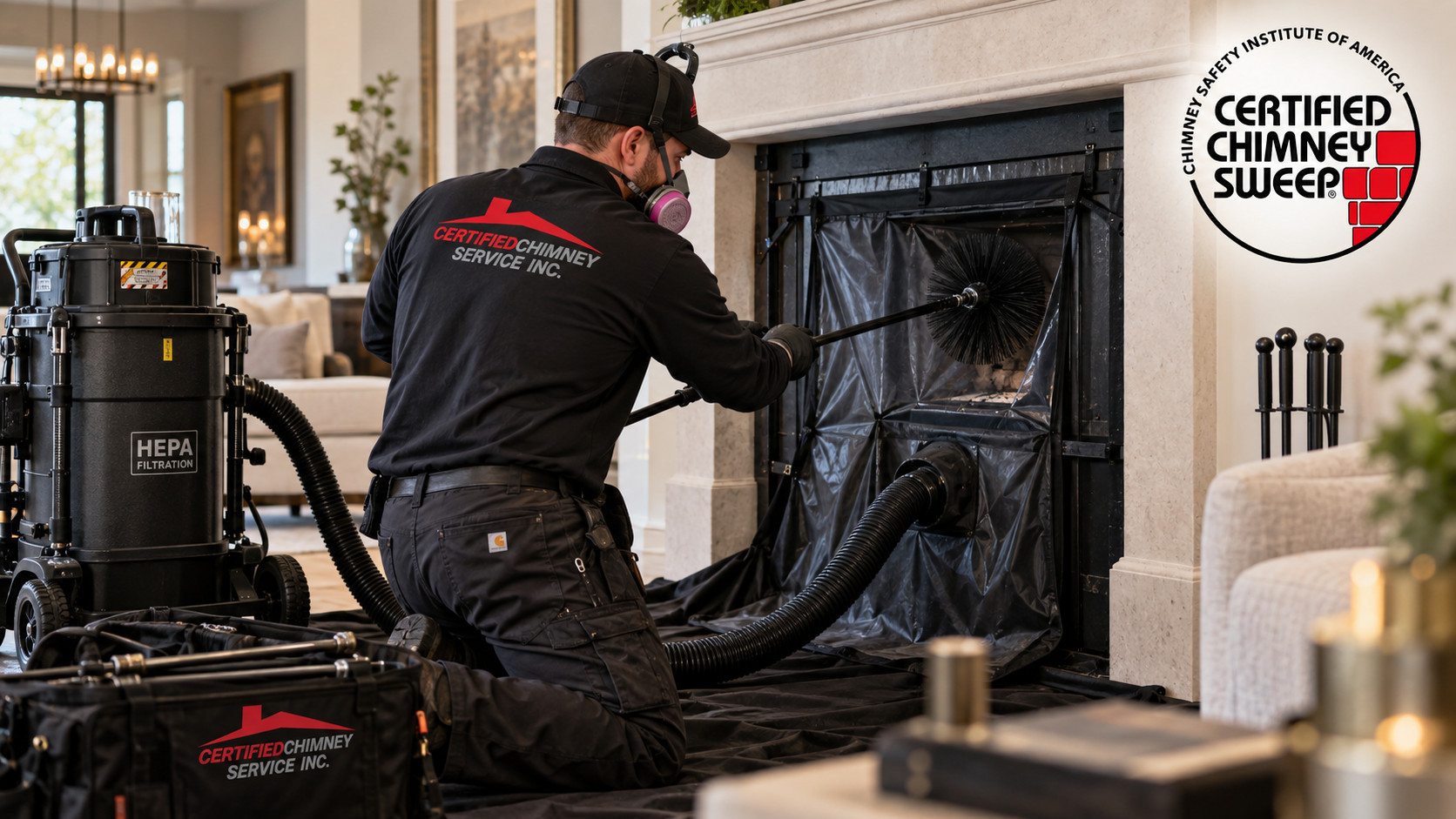
Covers fireplaces, wood stoves, pellet stoves, and heating systems including gas and oil systems. Book now before the winter rush fills our schedule.